


The Truth About Online Weight-Loss Supplements, “Natural Ozempic,” and Metabolism Boosters

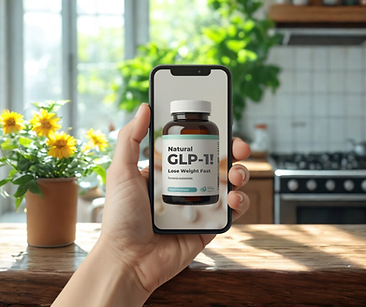
If you scroll social media for even a few minutes, you will likely see advertisements for “natural Ozempic,” GLP-1 boosters, metabolism enhancers, or miracle fat-burning pills promising to melt belly fat, balance hormones, and fix a “slow metabolism” without the need for prescription medication or lifestyle change.
The messaging is polished. The language sounds scientific. The promise is results with minimal effort.
It sounds appealing. It sounds credible. It sounds like an easy solution.
But, in health care, meaningful outcomes rarely come from effortless solutions.
Most highly marketed, off-the-shelf online weight-loss supplements are not supported by strong clinical evidence. Understanding the difference between persuasive marketing and real science is essential if you want sustainable, long-term metabolic health.
This article reflects clinical nutrition principles and evidence-based interpretation of current research relating to weight management, metabolic health, and commonly marketed supplement products.
Online vs Practitioner-Prescribed Supplements
Before exploring specific products and marketing claims, it is important to draw a clear distinction between online supplements and those prescribed by qualified practitioners.
The supplements heavily advertised online — often sold through social media promotions or marketed as over-the-counter fat burners, metabolism boosters, or hormone support formulas — are mass-marketed products designed for broad appeal. They rely on persuasive claims, trending keywords, and science-sounding language rather than individualised clinical reasoning.
In contrast, practitioner-prescribed supplements are selected based on personal health history, symptoms, medications, and laboratory results, using evidence-based protocols. Quality, dosage, duration of use, and the bioavailability of different nutrient forms are carefully considered, since nutrients can vary significantly in how well they are absorbed and utilised depending on their quality, chemical form and formulation.
Many people assume that if a supplement contains a clinically studied ingredient, it will behave like a prescription medication. However, the presence of a researched ingredient does not guarantee clinical effectiveness when it is used in different formulations, forms or doses.
Why Online Weight-Loss Supplements Target This Market
Online supplement marketing is particularly focused on people searching for answers to changes in body composition, energy levels, or appetite regulation.
Online search behaviour reflects strong interest in topics about abdominal fat accumulation, ongoing fatigue, or the feeling that metabolism has slowed over time. The supplement industry targets these "pain points", positioning products as simple solutions to complex physiological changes.
The implicit message behind much of this marketing is that the body is broken and needs to be “fixed” - with a capsule. While this is a compelling sales narrative, it is rarely supported by strong clinical evidence.
Natural Ozempic and GLP-1 Supplement Claims
The popularity of GLP-1 receptor agonist (RA) medications such as Ozempic, Wegovy and Mounjaro has led to the emergence of supplements marketed as “natural GLP-1 support.”
These products typically contain ingredients such as berberine, fibre complexes, cinnamon, or herbal blends.
Prescription GLP-1 medications directly activate GLP-1 receptors, influencing appetite regulation and gastric emptying through pharmacological pathways. Supplements do not replicate this mechanism.
While some ingredients may have modest effects on glucose metabolism, this is not equivalent to clinically meaningful appetite suppression or fat-loss outcomes.
The term “natural Ozempic” is therefore a marketing strategy rather than a scientifically equivalent description.
Berberine and Gut Microbiome Effects
Berberine is widely available online without a prescription and has become one of the most heavily promoted ingredients in the supplement market. It is frequently positioned as a “natural” alternative to medications prescribed for Type 2 Diabetes and is often marketed as a non-prescription substitute for prescription metabolic or weight management therapies, such as GLP-1 receptor agonists.
Emerging evidence suggests that berberine’s antimicrobial properties may reduce gut microbial diversity by killing certain beneficial bacterial populations and potentially increasing pro inflammatory bacteria species.
This means that berberine is not universally beneficial for gut support, and using it long-term without supervision could be potentially harmful.
Metabolism Boosters, Energy Supplements, and Fat Burners
Metabolism boosters and thermogenic fat burner supplements are another heavily marketed category.
These products commonly contain stimulants such as caffeine, green tea extract, or capsaicin. While stimulants can temporarily increase heart rate and short-term energy expenditure, the magnitude of metabolic effect is small and transient.
They do not rebuild lean muscle mass, improve sleep quality, reduce chronic stress load, or correct the physiological drivers of long-term weight regulation.
High-stimulant formulas may also worsen anxiety, palpitations, blood pressure fluctuations, and sleep disturbance in susceptible individuals.
Metabolism is determined by factors such as muscle mass, recovery, sleep, and physiological signalling rather than by acute stimulant exposure.
Menopause and Hormone Support Supplements
Many menopause-targeted supplements are marketed as "hormone-balancing" solutions, often implying that they can restore hormonal equilibrium through herbal or nutritional ingredients.
Practitioners may prescribe specific herbal or nutritional compounds within a clinical context, where dosing, duration, symptoms and medical history are considered. This is very different from mass-marketed online or over-the-counter products that position themselves as universal “miracle” hormone or menopause "cures".
Ingredients commonly found in menopause supplement blends include herbs such as black cohosh, red clover, or sage. While there is some evidence that individual ingredients may offer symptom-specific benefit in selected populations, research supporting multi-ingredient formulations as a whole is limited. Most combination blends are not studied as complete products.
Claims that menopause supplements can meaningfully influence weight loss are largely marketing-driven rather than supported by strong clinical evidence.
Regulatory Risks and Online Purchasing
Product sourcing and regulation are important safety considerations.
In Australia, supplements listed with the Therapeutic Goods Administration must meet manufacturing and ingredient quality standards.
Products purchased directly from overseas websites may not meet these requirements.
International investigations have identified weight-loss supplements containing undeclared pharmaceutical substances or stimulant doses higher than declared.
The assumption that “natural” automatically means safe is misleading.
What Supports Sustainable Metabolic Health
Sustainable weight and metabolic outcomes are driven by consistent lifestyle strategies rather than shortcut solutions.
Preserving lean muscle mass through resistance training is one of the strongest predictors of long-term metabolic stability across the lifespan. Adequate protein intake supports appetite regulation and body composition. Sleep quality and stress management influence hormonal signalling and insulin sensitivity. Whole-food nutrition supports stable blood glucose control.
Supplements can be useful in selected clinical contexts when individually prescribed, but they are supportive tools rather than primary treatment.
Nutrition and supplement decisions are most effective when guided by clinical context rather than marketing trends.
Conclusion
The supplement industry is highly skilled at marketing products as simple solutions to complex metabolic concerns.
Highly marketed online supplements labelled as “natural Ozempic,” metabolism boosters, or fat burners do not replicate prescription medication mechanisms and are not reliable strategies for long-term weight maintenance.
If you have completed a GLP-1 treatment journey, off-the-shelf online supplements are not an appropriate maintenance strategy. Long-term weight management is not achieved by replacing medication with unregulated or heavily marketed herbal or stimulant blends. Sustainable results are built by preserving lean muscle, supporting metabolism through nutrition and lifestyle, and creating habits that can be maintained over time.
If you feel overwhelmed by supplement advertising or uncertain about what is actually appropriate for your body, personalised guidance is the safest and most effective approach.
If you would like professional, evidence-based support to navigate weight management, metabolic health, or supplement decisions, you are welcome to book a Free 10 minute Discovery Call or Initial Consultation to explore a plan tailored specifically to you.
in good health,
Melissa


Comments